
Peoria Probate Court Records
Probate court records in Peoria are kept by the Peoria County Circuit Clerk at the county courthouse on Main Street. Peoria is the county seat, so all probate filings for the area go through this one office. You can search for estate cases, wills, guardianship filings, and other probate court records through the county's online case search portal or by visiting the clerk in person. The 10th Judicial Circuit Court handles probate matters here, with cases heard in a dedicated courtroom inside the courthouse. Whether you need to look up a past case or file new probate paperwork, this page covers the key steps and resources for searching probate court records in Peoria.
Peoria Quick Facts
Where Probate Court Records Are Filed
Peoria sits in Peoria County and serves as the county seat. All probate court records for residents of Peoria and the rest of the county are filed with the Peoria County Circuit Clerk. The clerk is the keeper of both the seal of the circuit court and the court records, including files and exhibits. Robert M. Spears holds this position now, and his staff handles every probate filing from new estate petitions to guardianship motions and will deposits.
The Circuit Clerk's office is inside the Peoria County Courthouse at 324 Main Street, Room G-22. Walk-in visitors can request copies of probate court records during business hours. The staff works with both lawyers and members of the public who need to find a case or file new documents. If you are not sure where to go in the building, ask at the front desk. They will point you to the right room. Parking near the courthouse can be tight, especially during morning hours, so plan for that if you are driving in.
Address: 324 Main Street, Room G-22, Peoria, IL 61602
Phone: 309-672-6000
Hours: 8:00 AM - 4:30 PM, Monday through Friday
The clerk's office has also offered mobile hours at locations across the county. This brings some clerk services to people who can not easily get to the courthouse. Call ahead to ask about upcoming mobile hours and whether probate record requests are part of those events. You can learn more on the About the Clerk page on the Peoria County site.
The Peoria County Circuit Clerk website provides details on how the office works and what services are available for the public.
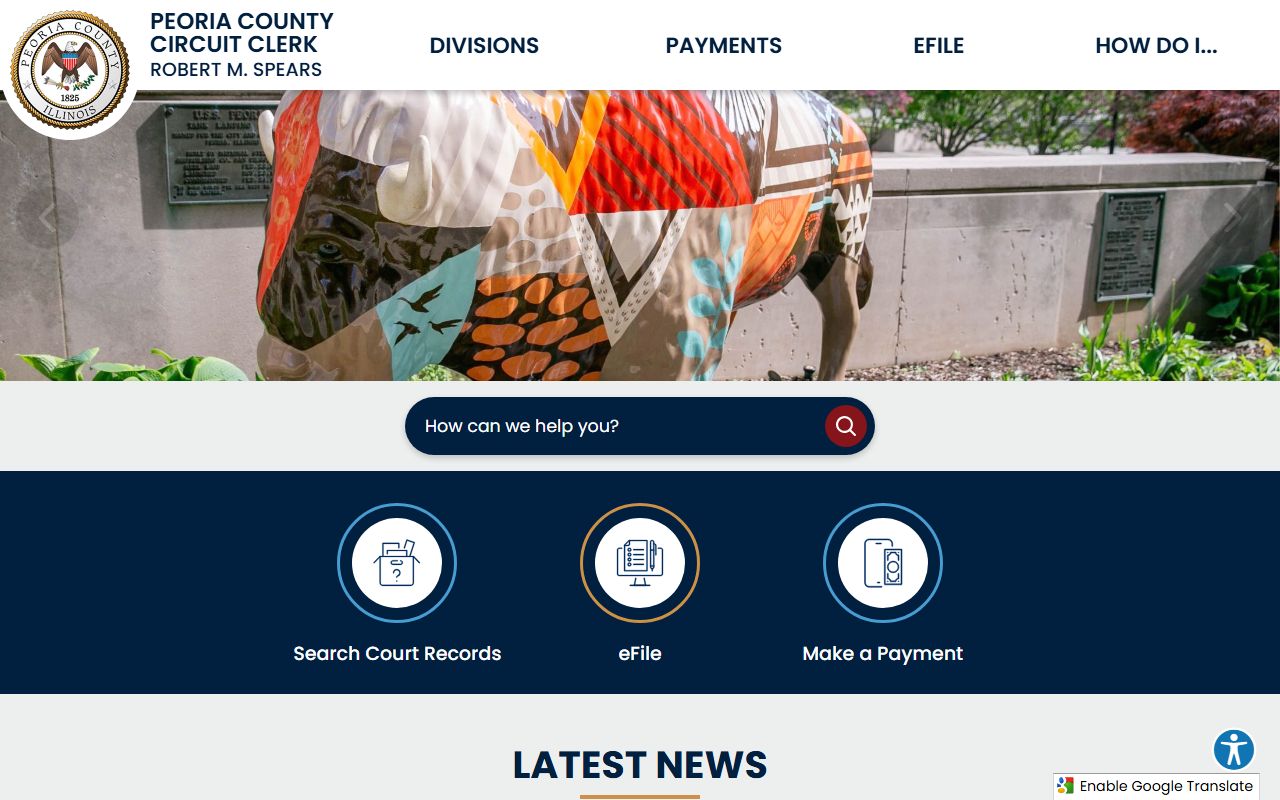
That page has links to forms, fee schedules, and contact information for different divisions in the clerk's office.
Search Probate Court Records Online
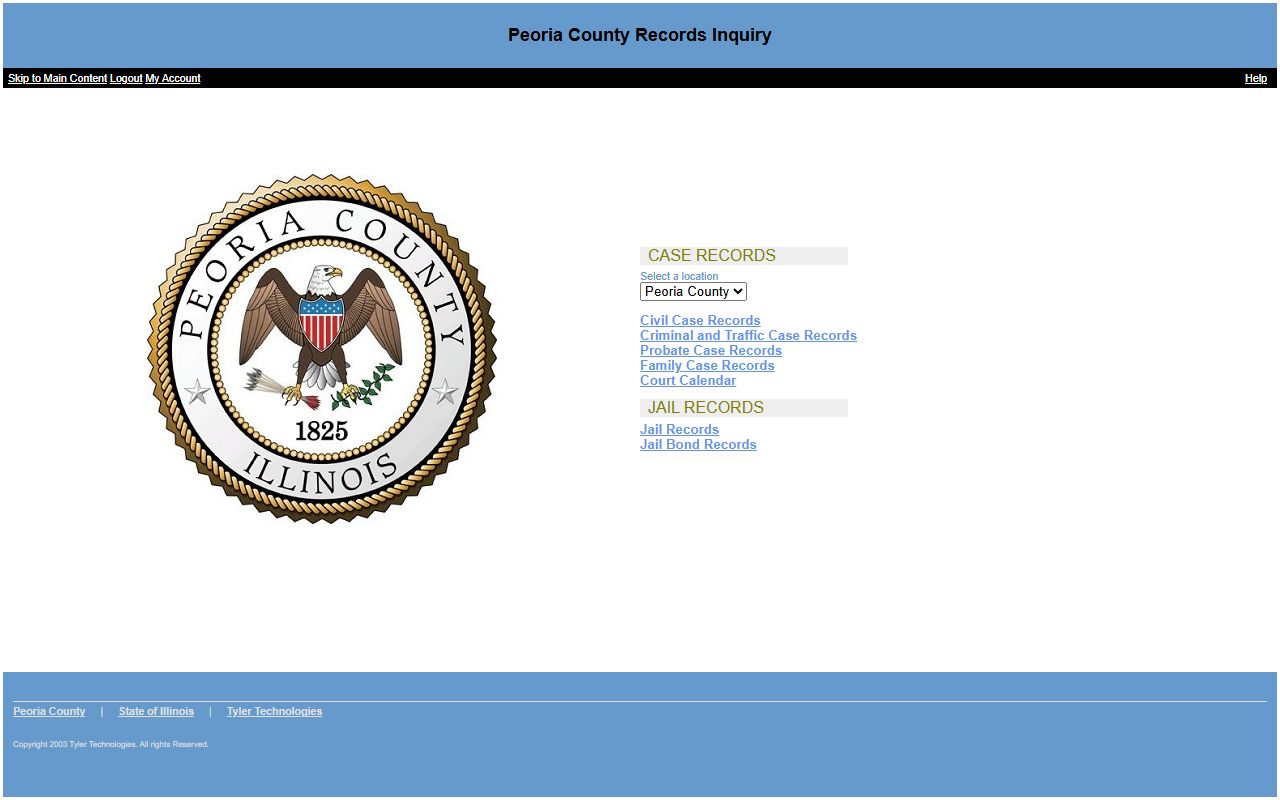
Peoria County runs an online case search portal through Tyler Technologies. The system lets you look up court records by party name, case number, or filing date. Probate cases show up alongside civil, criminal, and other case types. You can filter your search by case category to narrow down the results to just probate matters. This is the fastest way to check on a case without going to the courthouse.
To start, visit the Peoria County case search portal. The portal shows basic case details like the parties involved, filing dates, case status, and any upcoming hearing dates. It does not give you full document images for most cases. If you need actual copies of probate court records, you will still need to contact the clerk's office or visit in person. For a name search, type the last name of the person whose estate or guardianship case you are trying to find. If you have the case number, use that for a direct match.
The case search portal is one of the main ways people in Peoria access probate court records without making a trip to the courthouse.
Try different name spellings if your first search comes up empty. Small differences in how a name was entered by the clerk can affect what the system returns. The portal is free to use and does not need an account to run a basic search.
Peoria Probate Court Division
Probate cases in Peoria are heard in Courtroom 203 of the Peoria County Courthouse. This room handles chancery, probate, foreclosure, miscellaneous remedies, and evictions. The presiding judge for these case types is Hon. Sean W. Donahue. If you have a court date set for a probate case, Courtroom 203 is where you need to go. The courtroom schedule can change, so check ahead if you want to confirm your hearing time.
The 10th Judicial Circuit covers Peoria County and several surrounding counties. Courtroom assignments and judge contact details for the full circuit are listed on the 10th Circuit courtroom assignments page. That page is updated each year. It has phone numbers for each courtroom too, which helps if you need to call about a scheduling question. The civil division page on the Peoria County website also explains which courtrooms handle which case types, including probate.
Peoria is the largest city in the 10th Circuit. Most of the probate cases in this circuit move through the Peoria courthouse.
Types of Probate Court Records
Estate administration cases make up the bulk of probate court records in Peoria. When a person dies, someone files a petition to open the estate. The court appoints a personal representative to manage assets and pay debts. Every document filed in that process becomes part of the probate court records. This includes the will, inventory of assets, creditor claims, accountings, and the final order closing the estate. The Illinois Probate Act (755 ILCS 5) sets the rules for how estates are handled in the state.
Guardianship cases are the next most common type. These involve a petition asking the court to appoint a guardian for someone who can not manage their own affairs due to age, disability, or illness. The case file holds the petition, medical evidence, any objections filed, and all court orders. Adult guardianship cases can stay open for years and generate many filings. Minor guardianship cases follow a similar process but deal with children. Under 755 ILCS 5, the court must find clear and convincing evidence of disability before appointing a guardian for an adult.
Small estate affidavits also pass through probate. Illinois law allows a simplified process for estates under a certain dollar value. These cases have fewer filings but still produce probate court records stored by the clerk. Will deposits are another category. A living person can file their will with the clerk for safekeeping until it is needed.
Fees for Probate Records
The clerk charges fees for copies of probate court records. Rates are set by Illinois law and can change. Filing fees for new probate cases vary by type. Full estate administration cases have higher fees than small estate affidavits or will deposits. Call the clerk's office at 309-672-6000 for the current fee schedule before you go.
Certified copies cost more than standard copies. You need a certified copy if you plan to use the document for legal purposes, like proving your role as executor to a bank or title company. The clerk can tell you which type of copy fits your situation. Bring cash, a check, or a money order if you plan to pick up copies in person. E-filed documents collect fees through the online system at the time of filing.
How to Get Copies
The most direct way to get probate court records is to visit the clerk's office at 324 Main Street, Room G-22. Bring the case number or the full name of the person whose records you need. The staff will pull up the file and make copies. Try to arrive early. Requests made close to the 4:30 PM closing time may need to wait until the next business day.
Mail requests are also an option. Write to the Peoria County Circuit Clerk at the address listed above. Include the party name, case number if you have it, and a description of what you want. Send a check or money order for the copy fees. The clerk will process your request and mail back the copies. Allow at least two weeks for processing and return mail. This method works well if you can not make the trip to the courthouse in person.
Illinois Probate Law
The Illinois Probate Act (755 ILCS 5) is the main law governing all probate court records in the state. It covers how estates are opened, how personal representatives are appointed, and what duties they have. The law also sets rules for guardianship, will contests, and small estate procedures. Every probate case filed in Peoria must follow these rules.
Under 755 ILCS 5, a will must be filed with the Circuit Clerk in the county where the deceased lived. The clerk stores the original will as part of the probate court records. If no will exists, the estate goes through intestate succession, which is also covered by the same statute. The law spells out who gets what when there is no will, based on the family relationships of the surviving relatives. Probate court records in those cases include the petition to open the estate, letters of administration, and all court orders.
The Illinois Courts approved forms page has standard probate forms you can use in Peoria County. These forms are free to download. The Illinois State Bar Association can also connect you with a probate attorney in the Peoria area if you need legal help.
Peoria County Probate Records
All probate court records for Peoria residents are filed through Peoria County. The county page has more detail on courthouse info, fees, and how the county system works for all cities in the county.
Nearby Cities
If the person whose probate court records you need lived in a different city, you may need to search the county where that city is located. Here are nearby cities with probate court records pages.